
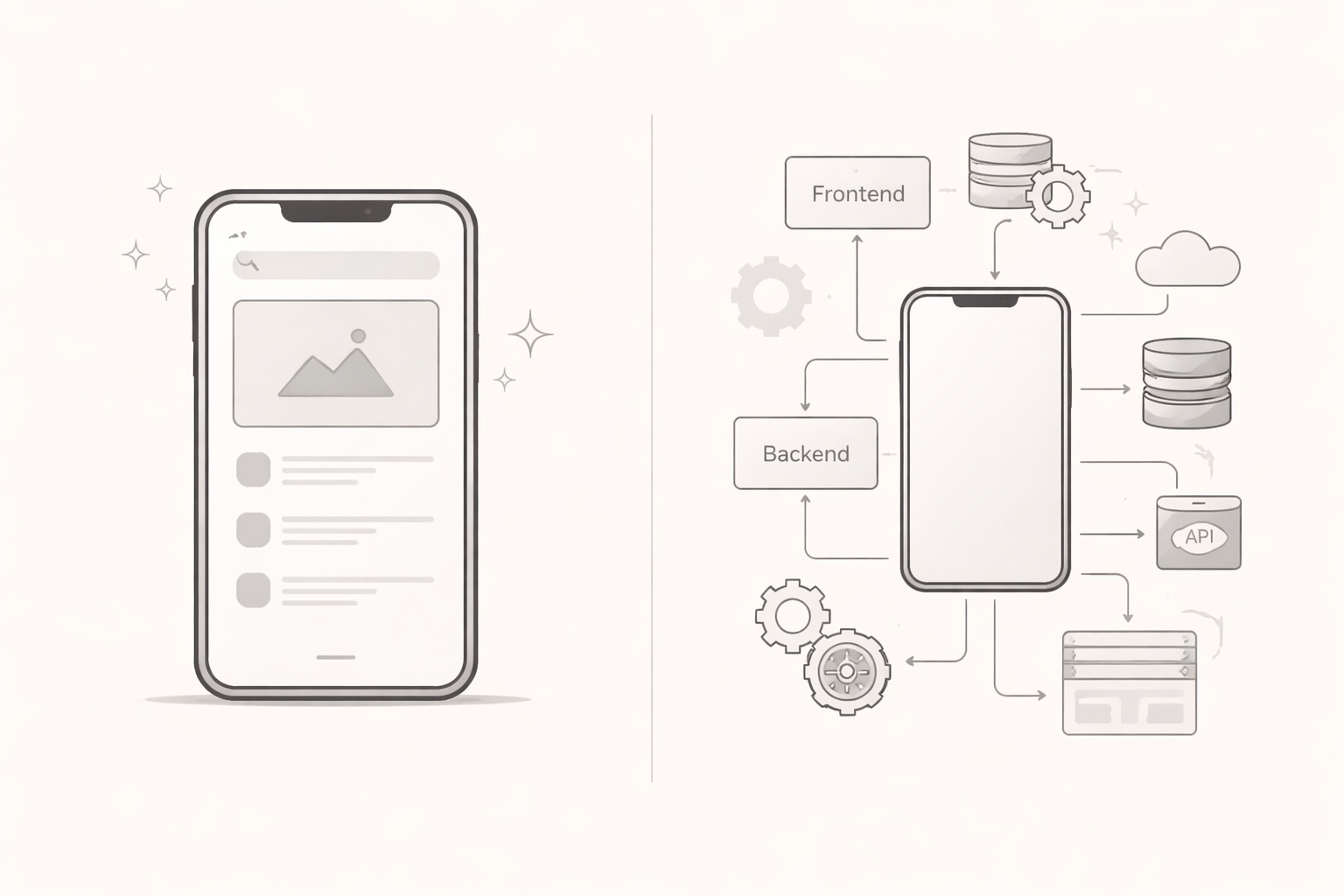
When a WordPress project starts considering a mobile application, comparisons with custom native apps appear almost automatically.
It is important to be clear from the beginning: a simple mobile app does not replace a custom native application. This is neither a flaw nor a bad decision.
Two types of apps, two different goals
A custom native application is designed for a specific, sometimes critical use case. All business logic is embedded directly inside the app.
This approach allows full control over interface, performance and system integration, but comes with higher costs, longer timelines and ongoing maintenance.
What a WordPress-based mobile app aims to do
A WordPress-based mobile app starts from a simple reality: the website already exists, with its content, users and usage patterns.
The goal is not to rebuild a complete product, but to provide an installable and more accessible mobile version.
This positioning follows what was explained earlier when comparing mobile websites, PWAs and native apps:
see the reference article.
Intentional and coherent limitations
A WordPress mobile app does not embed complex business logic on the mobile side.
Some advanced native features are intentionally out of scope to keep the application simple, stable and maintainable over time.
These limitations are part of the trade-off and should be understood upfront.
A pragmatic choice above all
Comparing a WordPress app with a custom native app without considering context often leads to unrealistic expectations.
For many projects, a simple mobile app that is quick to deploy and easy to maintain is more than enough 🙂