
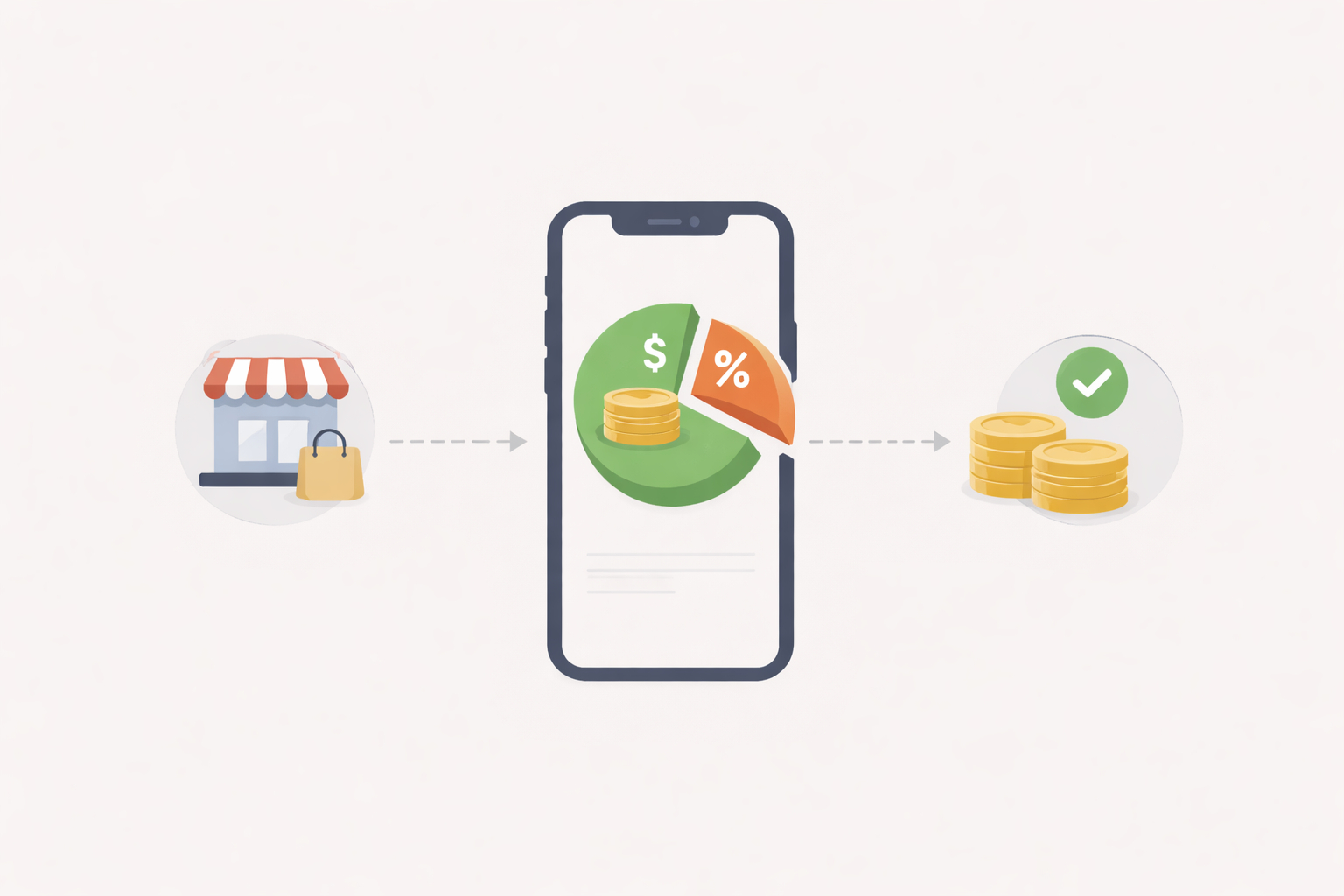
The 30% commission taken by Apple and Google is often reduced to a single number. In practice, its effects go far beyond accounting.
This commission directly influences product choices, positioning and sometimes even the viability of a mobile app.
An immediate impact on pricing structure
Taking 30% from each transaction forces a rethink of user-facing prices.
Either prices increase or margins shrink. In both cases, the economic balance changes.
For small or handcrafted projects, this commission can become a real blocker early on.
More complex business models
The commission applies not only to one-time purchases, but also to subscriptions and premium features.
This complicates pricing consistency between web and mobile.
This is closely related to in-app purchase rules discussed here:
the store-imposed framework.
Why some projects avoid in-app monetization
Given these constraints, some projects deliberately choose not to monetize inside the app.
The app becomes an access point rather than a payment channel.
This simplifies management but shifts monetization elsewhere.
Integrating the commission early
Discovering the commission’s impact too late often leads to forced compromises.
Accounting for it early helps build a coherent and sustainable product.
In app purchase is not possible with the WPMobile.App, if you sell a membership or premium access, WPMobile is unfortunately not for you.