
Google Play is often presented as the easier alternative to the App Store. In reality, constraints do exist, but they take a different form.
Where Apple relies on visible human review, Google mostly uses automated systems, with their own limitations.
A largely automated review process
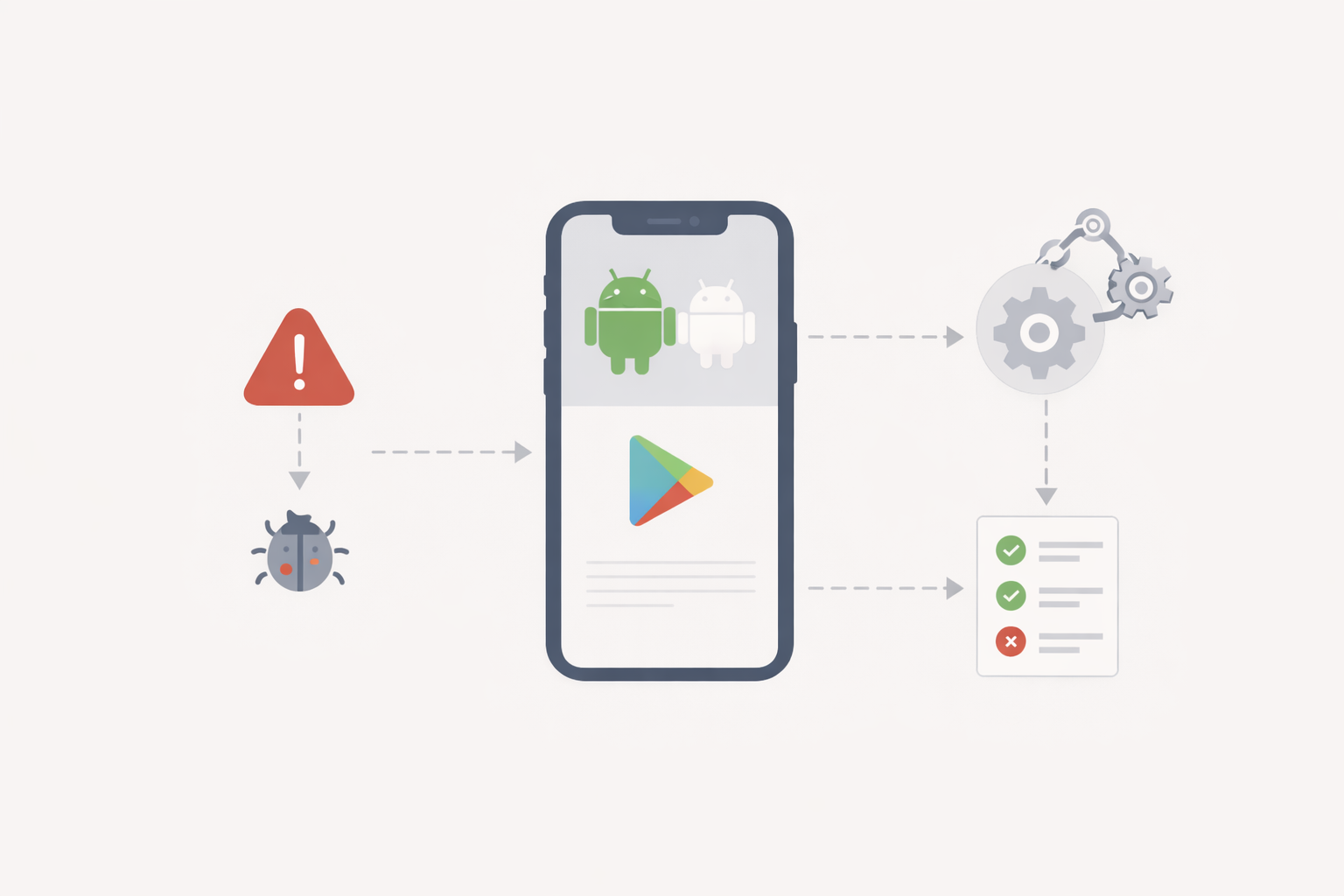
Most Google Play checks are automated.
Permissions, data access, declarations and suspicious behavior are analyzed without direct human intervention.
This enables fast publishing, but also opaque blocks when a signal is triggered.
Often unclear rejections
Unlike the App Store, rejection or suspension messages can be very vague.
Developers often have to interpret general policies to identify the real issue.
On simple or WebView-based apps, this may lead to multiple iterations.
WebView apps and Google Play policies
WebView apps are allowed but subject to the same rules as native apps.
Unnecessary permissions, misleading redirects or unclear content can quickly lead to sanctions.
This relates directly to the functional limits of WebView apps discussed earlier:
what is reasonable to do with a WebView.
Why anticipation still matters
Google Play’s apparent flexibility can create a false sense of safety.
An automated suspension can have serious consequences once users are involved.
Anticipating rules and voluntarily limiting scope remains the safest approach 🙂