
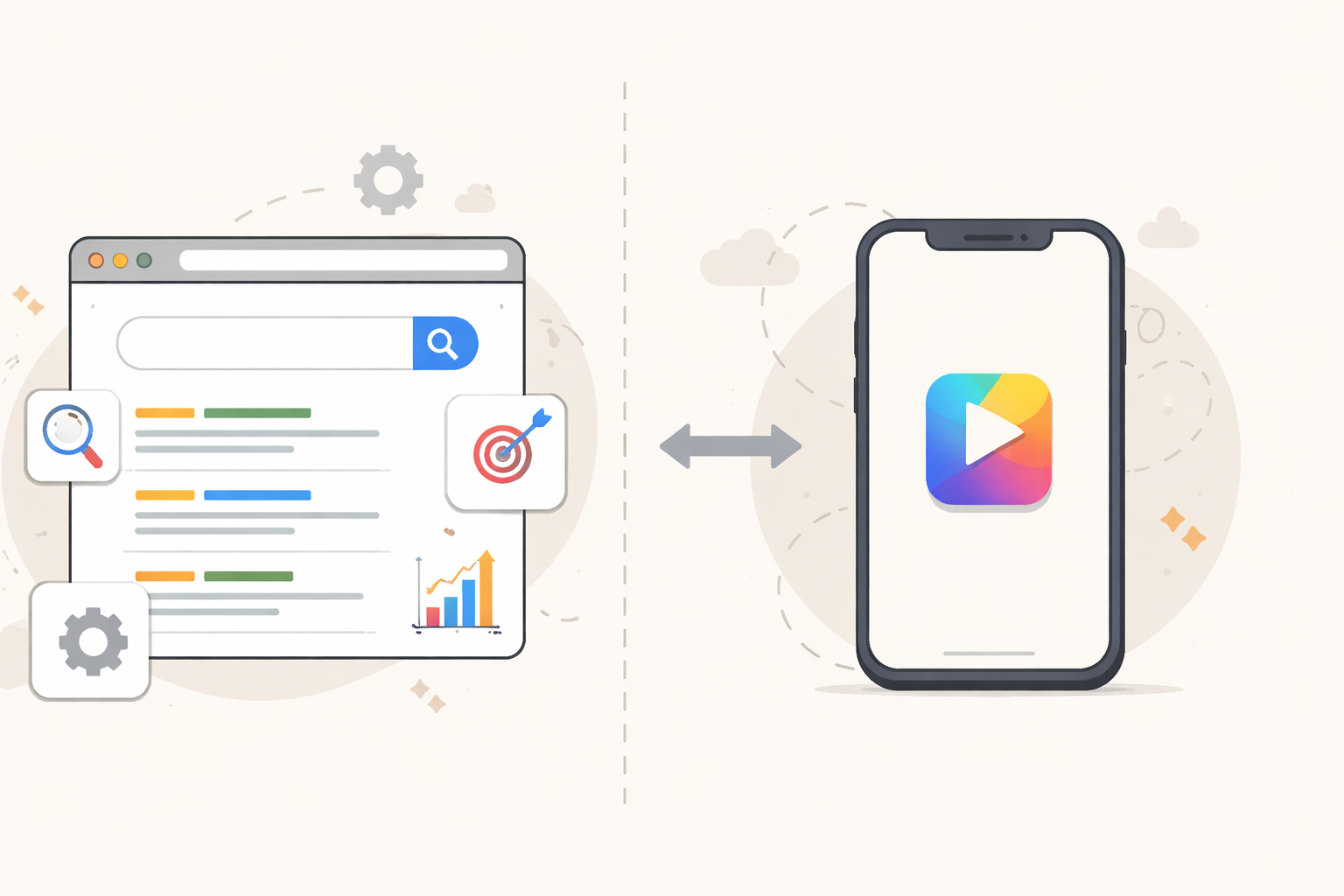
When a WordPress project evolves into a mobile application, one question comes up almost every time: what is the impact on SEO?
The answer is often simpler than expected. A mobile app does not replace a website from a search engine perspective 🔍
SEO remains tied to the website
Search engines index web pages, not mobile applications.
Whether a WordPress site is accessed through a browser or displayed inside a WebView app makes no difference for SEO.
URLs, content, metadata and structure remain those of the website.
A mobile app is not indexed like a website
A mobile application published on an app store is not crawled like a website.
Apple and Google index the app itself in their stores, but this store visibility is separate from traditional SEO.
This distinction is important when comparing mobile websites, PWAs and native apps.
The real role of WebView apps
In the case of a WebView-based app, the application acts as a container.
It displays the existing WordPress website as-is. SEO therefore depends entirely on the website, not on the app.
This mechanism was already explained in the article about WebView apps:
how WebView-based apps work.
What can change indirectly
A mobile app can have an indirect impact on a project, without modifying SEO itself.
- better user retention
- more frequent returns to the site
- regular content consumption
These signals are not direct ranking factors, but they can improve the overall performance of a project 📱
What a mobile app does not do for SEO
It is important to avoid unrealistic expectations.
- an app does not create new indexable pages
- it does not automatically improve rankings
- it does not replace standard SEO work
A mobile app is a complement, not an SEO strategy.
A pragmatic conclusion
Turning a WordPress website into a mobile app does not harm SEO.
But it does not magically improve it either. The SEO work still happens on the website, as before.
The app plays a different role: user experience, retention and recurring usage. And that already matters 🙂