“White label” can mean very different things depending on the tool. Sometimes it only means removing a logo from the home screen. In other cases, a more expensive plan is required to remove the provider’s branding or publish under your own name.
With WPMobile.App, the principle is simpler: once published, the application visually belongs to the project using it. Its name, icon, launch screen, colours, screenshots and store listing can all use the customer’s brand. Someone installing the app has no reason to know that WPMobile is involved.
The app is published on the customer’s account
The first element of white labelling is not visual: it is publication. I do not publish customer apps on an Apple or Google account owned by WPMobile. The app is intended to be published on the customer’s own developer account.
This matters because the stores display the identity associated with the publishing account. The customer therefore keeps the relationship with Apple and Google, their credentials, app listing and history. WPMobile generates the application and helps with publication, but it does not become the visible publisher of every app created with the service.
This separation also avoids an unpleasant form of long-term dependency: a business should not discover later that it does not really control its own store listing. Store constraints still apply, as discussed for example in the article about publishing an app on the App Store, but the account itself remains under the app owner’s control.
Name, icon, colours and store listing belong to the project
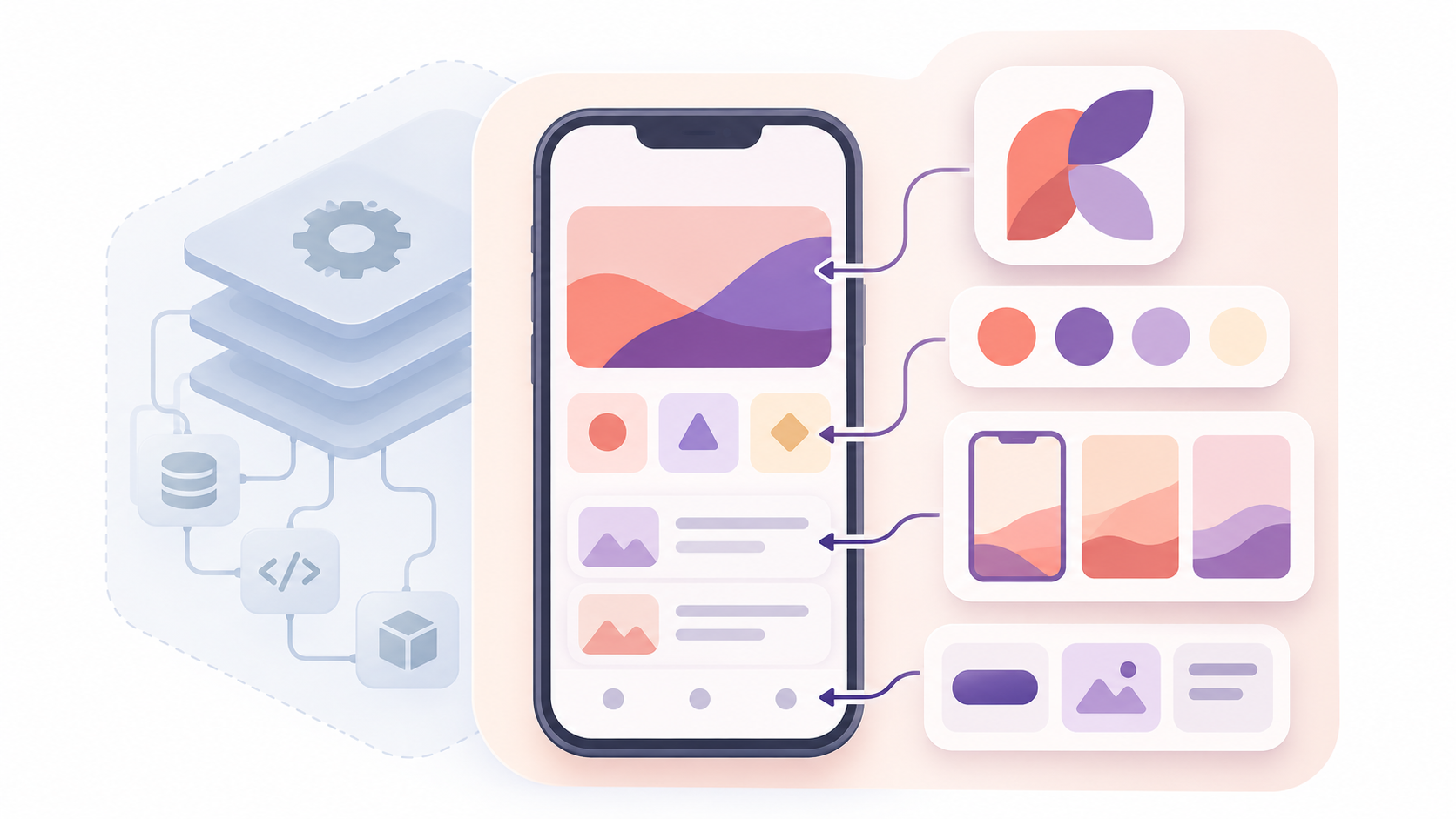
White labelling covers what users actually see. The application can use the website or company name, its icon and its visual identity. The App Store or Google Play listing also uses customer assets: app name, description, screenshots and graphics.
There is no mandatory “Powered by WPMobile” screen at launch and no branding inserted into the user interface. The technical operation still relies on WPMobile and its WordPress plugin, but that technical layer is not presented as part of the customer’s public-facing product.
Full white labelling is included in standard licences: it is not restricted to the agency pack or a premium add-on. Current options are detailed on the WPMobile pricing page.
The WordPress plugin remains visible in the administration area
There is, however, one place where the WPMobile name normally remains visible: the WordPress administration area. The plugin used to configure the app appears in the back office, which makes sense because this is where the website and application are connected.
For a website owner managing WordPress directly, this usually does not matter. For an agency delivering a fully branded back office, the requirement may be different. Some customers are expected to see only the agency’s brand, including when they log into WordPress.
In that situation, further customisation is possible through a must-use plugin. WPMobile can be hidden from the administration interface and some labels can, for example, be replaced with the web agency’s name. This is not an automatic standard-product option. The requirement needs to be discussed with me directly and additional fees may apply depending on the work involved.
Why this distinction matters for agencies
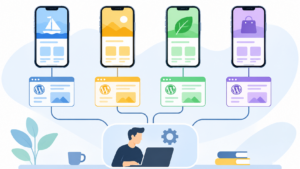
An agency may want to sell a complete service rather than a collection of technical tools. The customer is buying “their mobile app” from the agency, not a stack of plugins and providers they need to understand individually.
White labelling preserves that relationship. Publicly, the app only carries the customer’s identity. Inside WordPress, the agency can push customisation further when required. On the stores, each application can be published using the relevant customer’s Apple or Google developer account.
This organisation also avoids building an artificial reseller model in which every app is locked inside one central account. An agency can manage ten different customers while allowing each of them to own their own store presence.
White label does not mean hiding how the app works
Removing WPMobile branding does not turn the application into a fully custom native development. It remains a WebView app based on the WordPress website. White labelling is about the identity of the delivered product, not an attempt to disguise its technical architecture.
This distinction is healthy, especially in an agency-client relationship. It is perfectly reasonable to deliver an app under the customer’s brand while explaining that it relies on their existing WordPress site. That is actually one of the benefits of the model: keeping the website as the content source and avoiding two independent projects to maintain.
To see the result before making a decision, the WPMobile demo lets you test a WordPress site for free. It provides a realistic view of the navigation before working on final branding and store publication.
What if the customer changes agency?
Publishing the application on the customer’s account also makes things clearer if the commercial relationship changes. The store account does not depend on the provider that sold or configured the app. The business keeps its published application and access to the platforms.
For agencies managing multiple projects, this model also works with the licence pack: licences can be purchased in bulk and later redistributed to separate WPMobile customer accounts, while each app can be published on a different developer account. White labelling is therefore not only visual; it fits an organisation where each customer can genuinely remain in control of their project.